Case Competition
The University of Pennsylvania’s Orthopaedic Surgery Department has been at the forefront of innovation in fields including hand transplantation, robotic joint replacement, use of custom 3D printed implants in trauma care, biologics for arthritis, and many other areas. In the spirit of celebrating forward progress, the University of Pennsylvania Orthopaedic Journal (UPOJ) is pleased to announce the first annual Penn Ortho Case Competition!
UPOJ invites case report submissions involving the management of rare musculoskeletal disorders or anatomic anomalies, fixation of complex fractures, use of innovative technology (such as cutting-edge implants or biologics), or any orthopaedic case with a fascinating or novel aspect. Submissions should consist of one concise paragraph (~200 words) and high quality clinical and/or radiographic images. Submissions should be emailed to editor@upoj.org by 11:59pm on March 15th, 2025 as attached word documents. Pictures can be attached to the email or simply included in the word document. At this time, all case reports must be from Penn-affiliated hospitals or surgical centers, including CHoP.
Cases will be posted on this webpage on March 16th, 2025. A voting window to select the best case will be open between March 16th – March 23rd. The winning case report and honorable mentions will be featured on this webpage and in the 2025 edition of UPOJ. Authors may be asked to expand their case report with additional details if selected. In addition to eternal glory and professional validation, authors will receive a trophy vs. award (tbd) that will be prominently displayed.
Cases will appear here on March 15th, 2025 with instructions for voting!
2025 Case Competition Winners
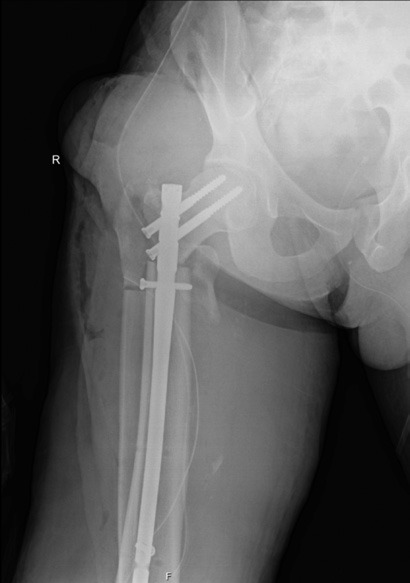
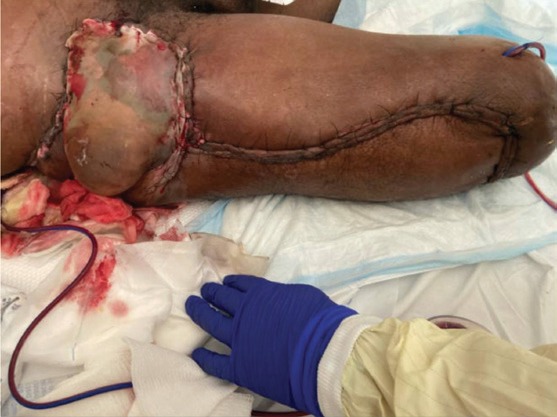
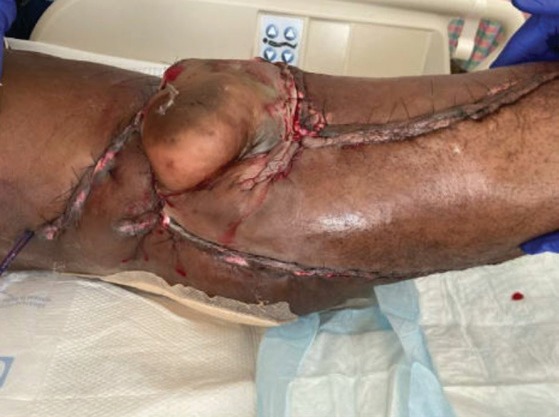
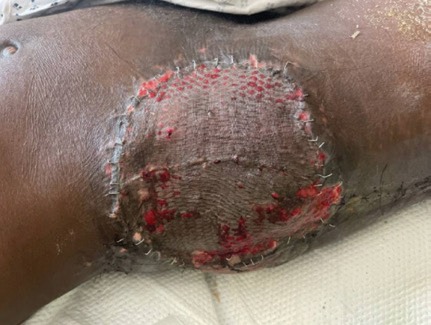
Traumatic Femoral Bone and Soft Tissue Loss in a 24-Year-Old Male: Tibial Turnup-plasty for Limb Salvage
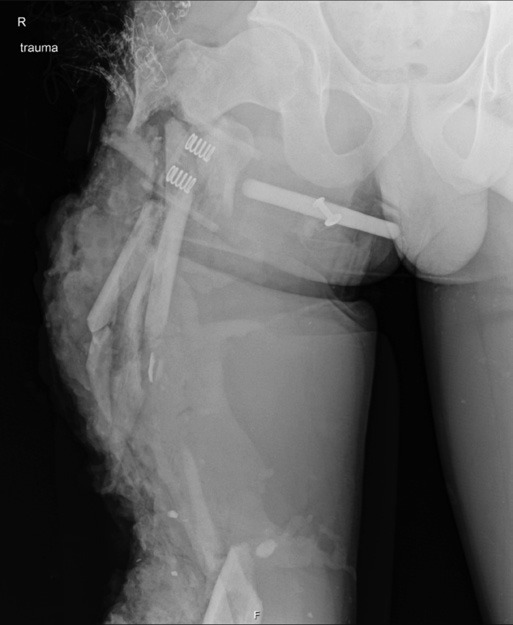
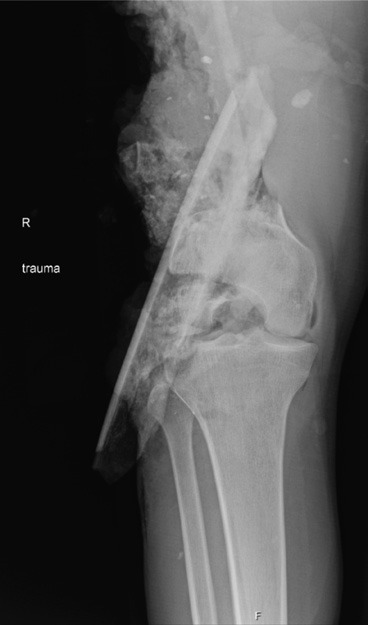
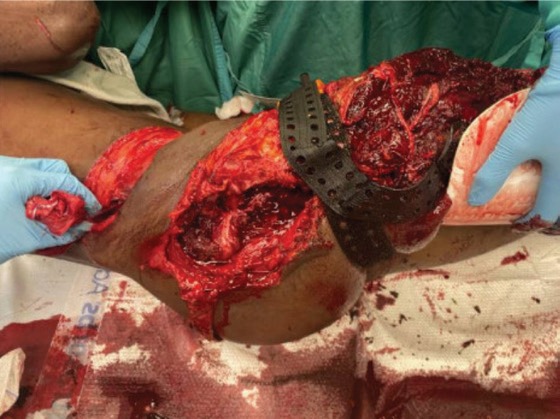
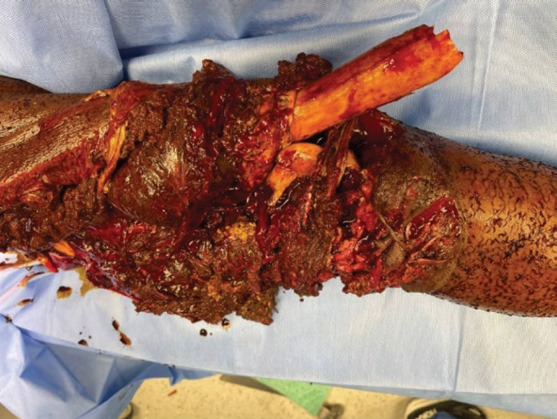
A 24-year-old male sustained a severe degloving injury to the right lower extremity with significant femoral bone loss from the intertrochanteric region to the distal femoral metaphysis after a tree stump grinder accident. He underwent emergent debridement and external fixator placement at our level I trauma center. Hip disarticulation was initially recommended however the patient opted for a tibia turnup- plasty to achieve a functional low above- knee amputation given patent vasculature. Preoperative imaging confirmed a comminuted greater trochanter fracture and lesser trochanter avulsion.



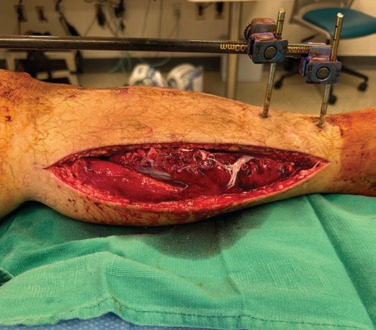
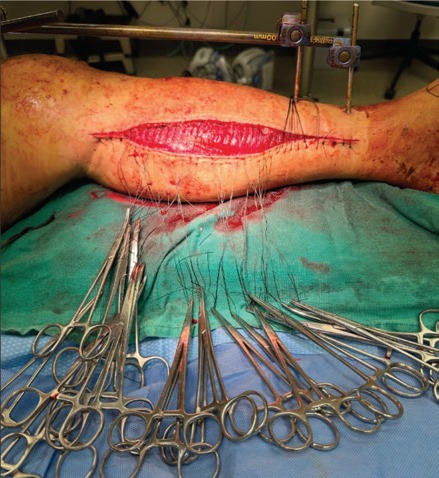
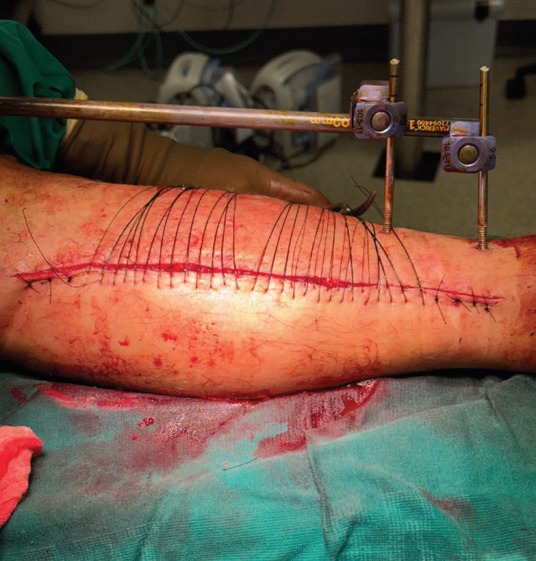
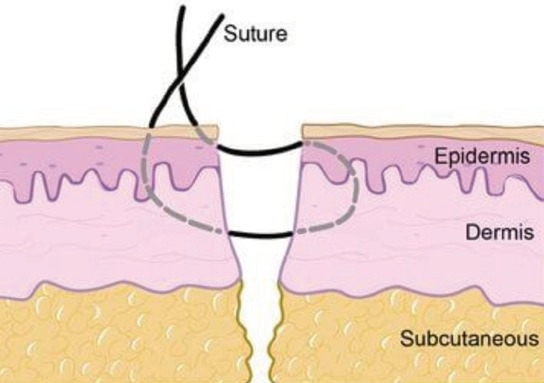
Allgöwer-Donati Method for Tension-free Wound Closure
43-year-old male who was in a motorcycle crash resulting in a a left closed bicondylar tibial plateau fracture. The patient had signs and symptoms of impending compartment syndrome, confirmed with objective data utilizing the MY01 device. He was urgently taken to the operating room.